Framed, Canvas or Acrylic: Which Print Format Should You Actually Buy?
Framed vs canvas vs acrylic vs rolled prints: how each format changes the artwork and which to choose for your room. Guide from Keep It What.
Framed, Canvas or Acrylic: Which Print Format Should You Actually Buy?
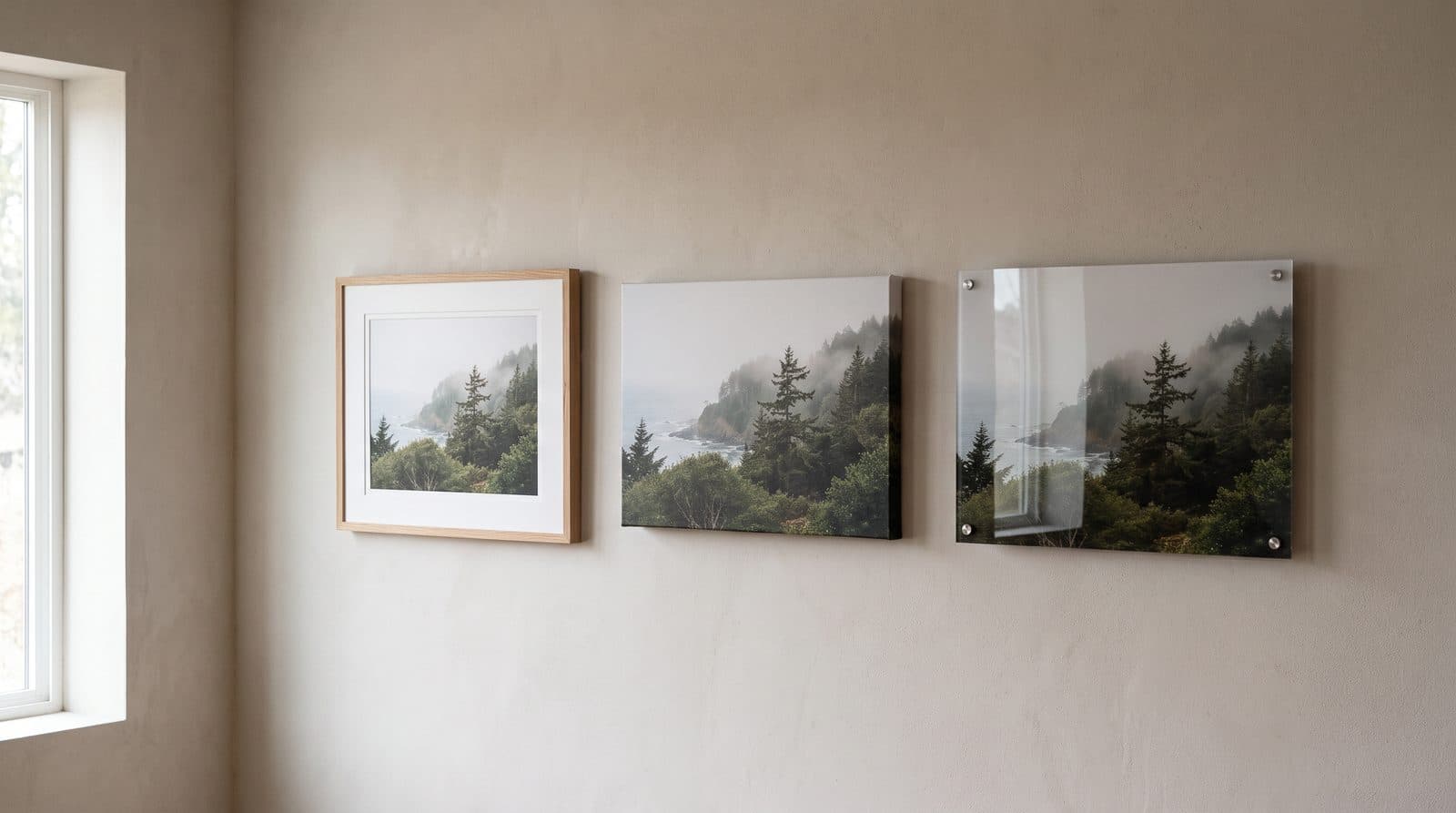
The format list looks like a price ladder, but the same artwork on gallery paper, on canvas and behind acrylic gives you three quite different objects, and the most expensive is not automatically the best one for your wall. Here is what each does.
Rolled Print
Giclée on heavyweight fine art paper with a printed white border, rolled in a tube.
This is the artwork and nothing else. No frame, no glass, no decision made on your behalf. It is the right choice if you already own a frame you like, if you have a framer, or if you are buying several pieces and want them framed consistently later.
It is also a budget option without any compromise on the print, which is identical to the one inside the framed version. What you are not paying for is the frame and the labour.
The catch is that you still have to get it framed, and a rolled print sitting in its tube on top of a wardrobe is a very common sight.
Framed Print
Fine art paper behind a deep museum-board mount, in a hand-finished frame in oak, black or white.
The mount is what you are really buying. A generous border of board around a picture gives the eye somewhere to rest before it reaches the wall, which is why gallery framing uses so much of it and why a shop-bought clip frame always looks cheap. It also holds the paper off the glass, which matters for anything you intend to keep.
Buy framed when it is a gift. It arrives finished and goes straight on a hook, and the person receiving it does not inherit an errand.
Canvas
The image printed on matte cotton-blend canvas, stretched over a solid pine frame, edges wrapped.
Canvas removes the glass, and removing the glass changes the room. There is no reflection of the window or the television, so the piece is readable from any angle and in any light. On a painted image it is the most convincing of the formats, because the surface texture and the brushwork are doing the same thing.
It looks slightly smaller than its dimensions because there is no mount or frame around it, so go up a size if you are between two. It is also the most forgiving in a busy room, since it sits flat and quietly against the wall.
Acrylic
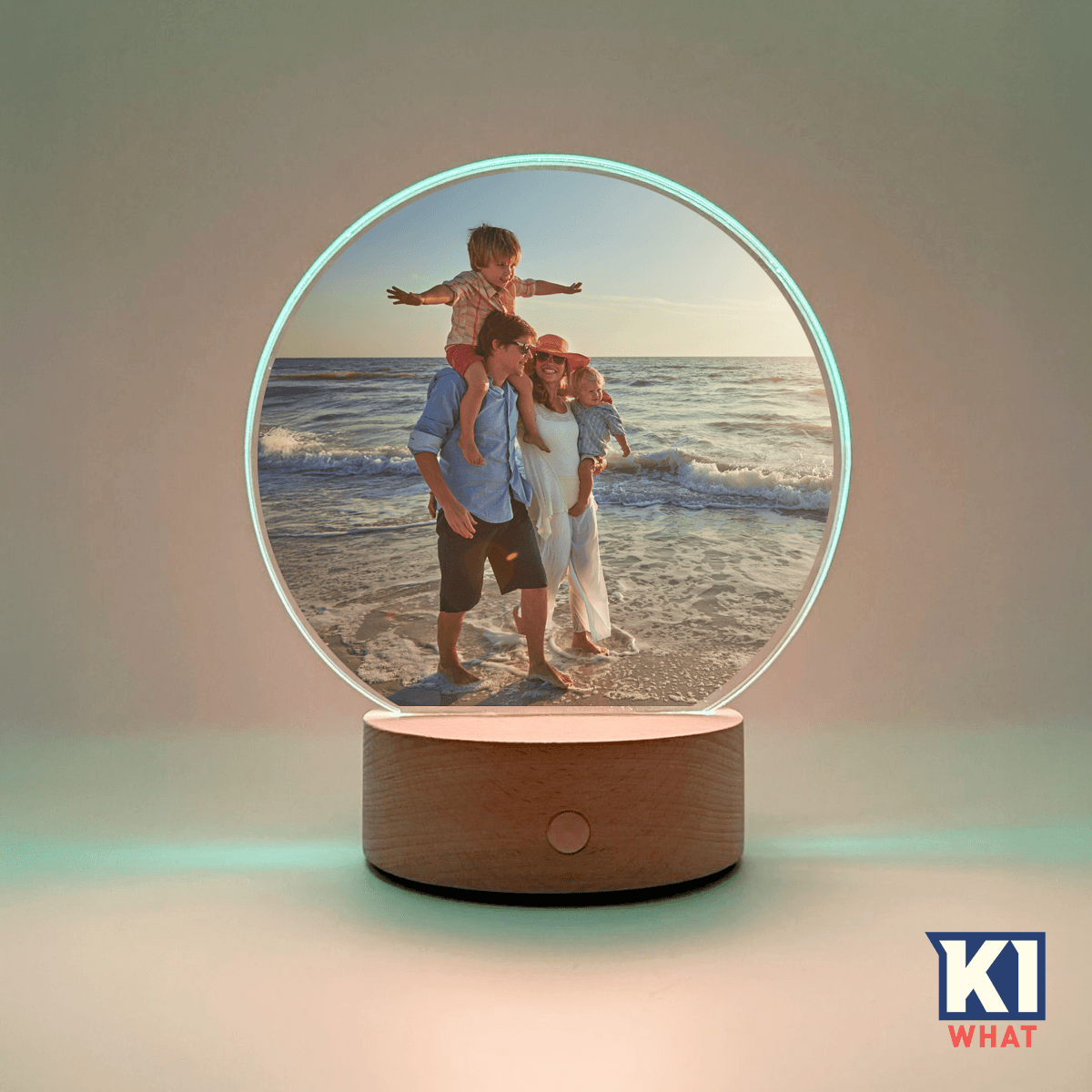
The print face-mounted behind polished acrylic and floated off the wall on hidden mounts.
This is the showpiece. Bonding the print directly to the acrylic removes the air gap that dulls a print behind glass, so blacks go genuinely deep and colours gain a wet, saturated quality. Floating it off the wall adds a shadow line that makes the piece look like an object rather than a picture.
There are two caveats. It is glossy, so it will pick up a window or a lamp behind you; think about what is opposite the wall before you commit. And it is unforgiving of a busy, cluttered room, because it draws the eye harder than anything else on this list.
The Short Version
- Buying for yourself and already own frames: rolled.
- Buying as a gift: framed, because it arrives ready.
- A bright room with lots of windows, or a painted image: canvas, with no glass to reflect anything.
- One statement piece on a plain wall: acrylic, provided nothing bright is opposite it.
Size Beats Format
If you take one thing from this: the format matters less than the size, and almost everyone buys too small. A rolled A1 will look better on a wall than a framed A3+, and cost less. Decide how much wall you are filling first, then choose how to finish it.
Every piece in the curated collection has a room view that shows it at true physical size on a photographed wall, in whichever format you have selected, which is the fastest way to settle both questions at once.
Shop Framed Photo Gifts
The Practical Bits
All four formats are made to order. Production is 1-2 business days before dispatch for prints, then standard UK delivery of 3-5 business days, free over £75 and £4.95 under. International is 7-14 business days with rates at checkout.
Made-to-order items cannot be returned or refunded unless they arrive damaged or defective. If a piece turns up with a knock, send us a photograph and we will replace it or refund you in full.
Written By
Patrick
Content Team
Part of the Keep It What team, dedicated to helping you create meaningful personalised gifts.